Wheel Dressing Machines for CNC Tool & Cutter Grinders
NEOTEK EliteDress 200 / 300 / 500
Standalone automated dressers in three configurations • keep your tool & cutter grinder cutting parts instead of dressing wheels.
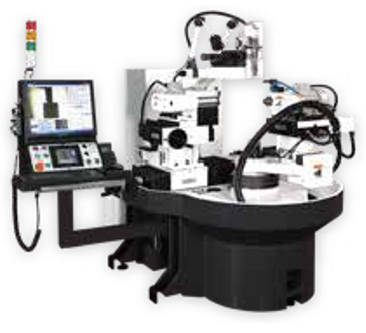
Axes: X (servo), Z (servo), B (manual)
W‑axis: 180 mm / Manual
U‑axis: 140 mm / Manual
Cover: Uncovered
Wheel range: Ø50–250 mm @ 100–2500 RPM
CCD verification: 20×–138×
Dimensions: 2106 × 1807 × 1815 mm
Weight: 1600 kg
Best for: Entry-level automated dressing
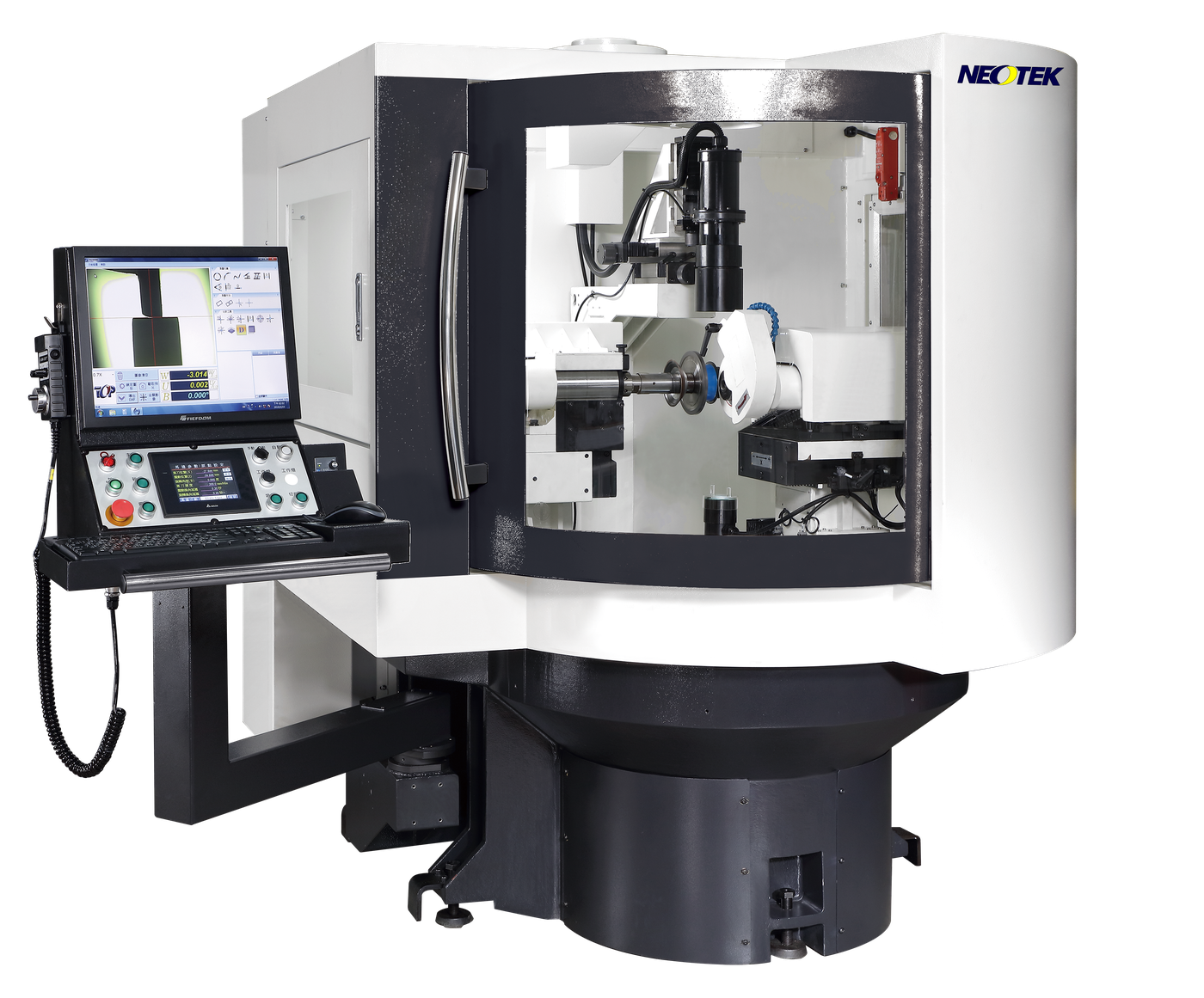
Axes: X (servo), Z (servo), B (servo + reducer)
W‑axis: 280 mm / Manual
U‑axis: 140 mm / Manual
Cover: Full enclosure
Wheel range: Ø50–250 mm @ 100–2500 RPM
CCD verification: 20×–138×
Dimensions: 2173 × 1874 × 1815 mm
Weight: 1750 kg
Best for: Repeatable servo positioning
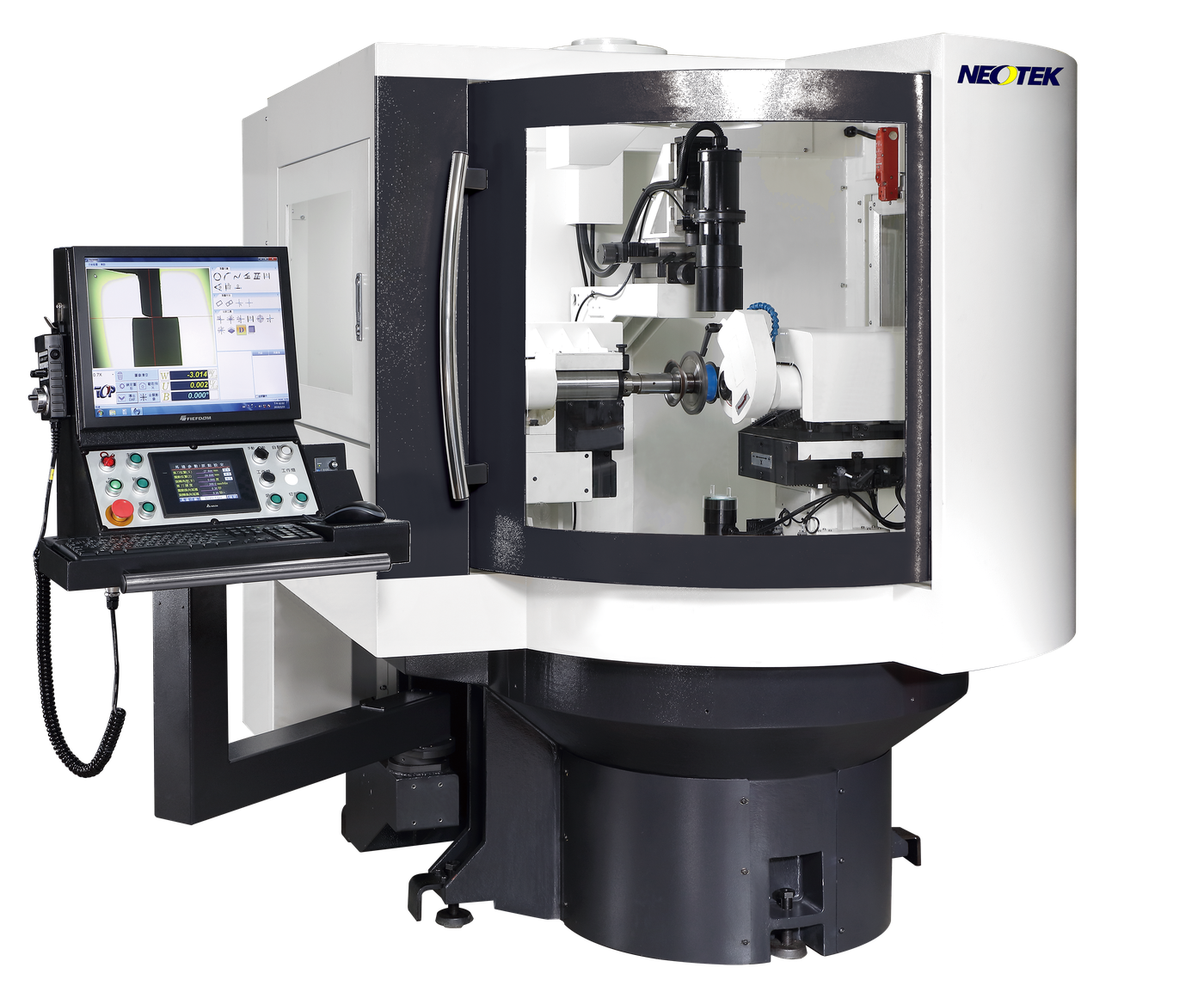
Axes: X (servo), Z (servo), B (servo + harmonic drive), U/W (servo)
W‑axis: 280 mm / Servo
U‑axis: 140 mm / Servo
Cover: Full enclosure
Wheel range: Ø50–250 mm @ 100–2500 RPM
CCD verification: 20×–138×
Dimensions: 1994 × 2209 × 2000 mm
Weight: 2260 kg
DXF profile import & comparison
Best for: Complex form profiles, lights-out cycles
Volumetric Machinery provides exclusive North American sales, applications and support for the NEOTEK EliteDress line. We serve tool & cutter grinding shops, carbide tool manufacturers, and CNC grinding facilities throughout North America — including the United States, Canada, and Mexico. All three models — EliteDress 200, 300, and 500 — are available for immediate quotation.
One Machine for Both Wheel Truing and Wheel Dressing
Every EliteDress model is a combined superabrasive wheel truing machine and wheel dressing machine. Truing restores wheel geometry — concentricity, roundness, and profile shape — while dressing conditions the abrasive surface to expose fresh diamond or CBN grain for clean, low-force cutting. On conventional aluminum-oxide wheels these operations blur together, but for superabrasive wheels they are distinct, and the EliteDress handles both in a single programmed cycle: roughing passes for geometric truing, followed by finishing passes for surface dressing.
After the cycle, the CCD camera system (20×–138× magnification) lets the operator confirm that the geometry is true and the surface is properly dressed before the wheel returns to the grinder. The EliteDress 500 adds DXF profile comparison for verifying complex form profiles to micron-level accuracy. For a deeper explanation, see Wheel Truing vs. Wheel Dressing.
Wheel Dressing Machine FAQ
What is a wheel dressing machine?
A wheel dressing machine is a precision tool that restores a grinding wheel's geometry and reconditions its abrasive surface. Truing corrects concentricity, roundness, and profile shape, while dressing exposes fresh cutting grain so the wheel cuts cleanly with low force.
What is the difference between wheel truing and wheel dressing?
Truing corrects the wheel's shape and running accuracy so it rotates true on the grinder. Dressing conditions the abrasive surface to expose sharp diamond or CBN grain. On superabrasive wheels these are distinct operations, and the EliteDress performs both in one programmed cycle.
What types of grinding wheels can it dress?
The NEOTEK EliteDress dresses superabrasive wheels — both diamond and CBN — from Ø50 to 250 mm at wheel speeds of 100 to 2500 RPM, with a CCD camera system (20×–138×) for verifying geometry after the cycle.
Which wheel dressing machine is best for a CNC tool & cutter grinder?
The EliteDress 200 suits entry-level automated dressing, the 300 adds a servo B-axis for repeatable positioning, and the 500 provides full CNC automation with DXF profile import for complex form profiles and lights-out cycles. The best choice depends on your wheel types, profile complexity, and required automation level.
Is the EliteDress compatible with ANCA, Walter, and Rollomatic grinders?
Yes. The EliteDress works with common tool & cutter grinder platforms — including ANCA, Walter, Rollomatic, Schütte, Vollmer, Haas, and Schneeberger — using the correct wheel-pack adapter to match your grinder's spindle interface. Confirm your adapter on the spindle compatibility page.
Where are these wheel dressing machines available?
Volumetric Machinery provides exclusive North American sales, applications and support for NEOTEK EliteDress wheel dressing machines across the United States, Canada, and Mexico, with U.S.-based warranty handling and spare-parts sourcing from Los Angeles, California.